DENVER- The University of Denver began construction early January of 2019 on several new projects, seeking to update the impression they give off as a campus. Vice Chancellor of Institutional Partnerships, David Greenberg, made sure to touch on several of the aesthetic aspects of the main hall in Mary Reed, in front of a stunning diorama of a prospective future campus among other cultural artifacts, such as the flags of the Cheyenne and Arapaho peoples.
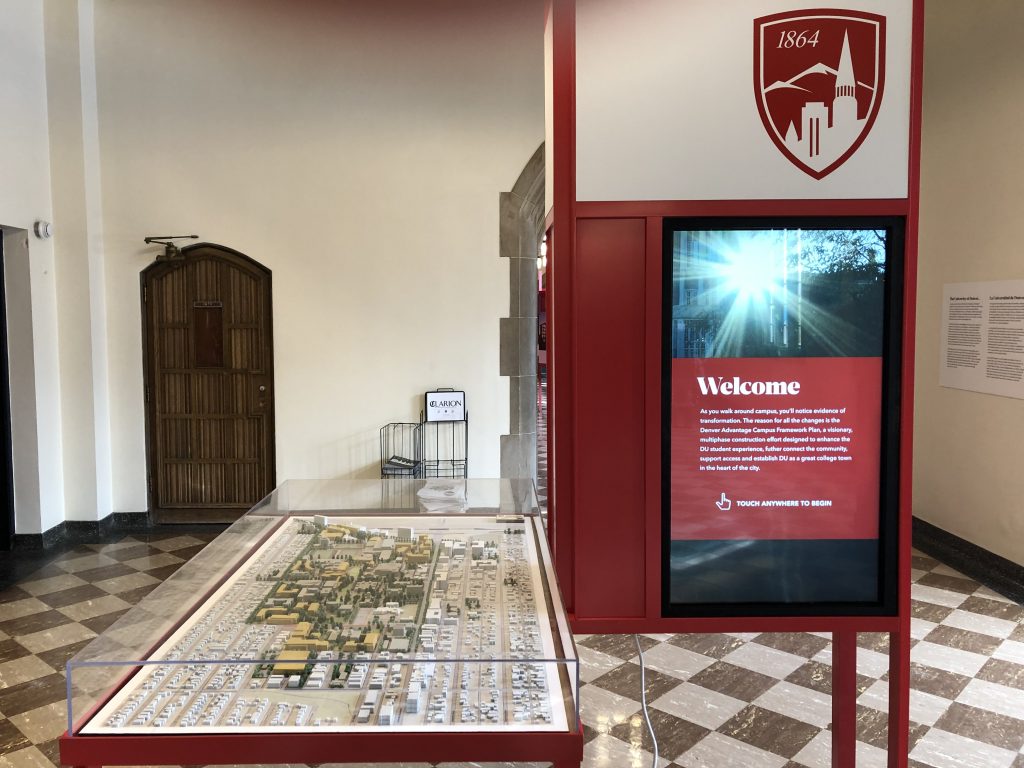
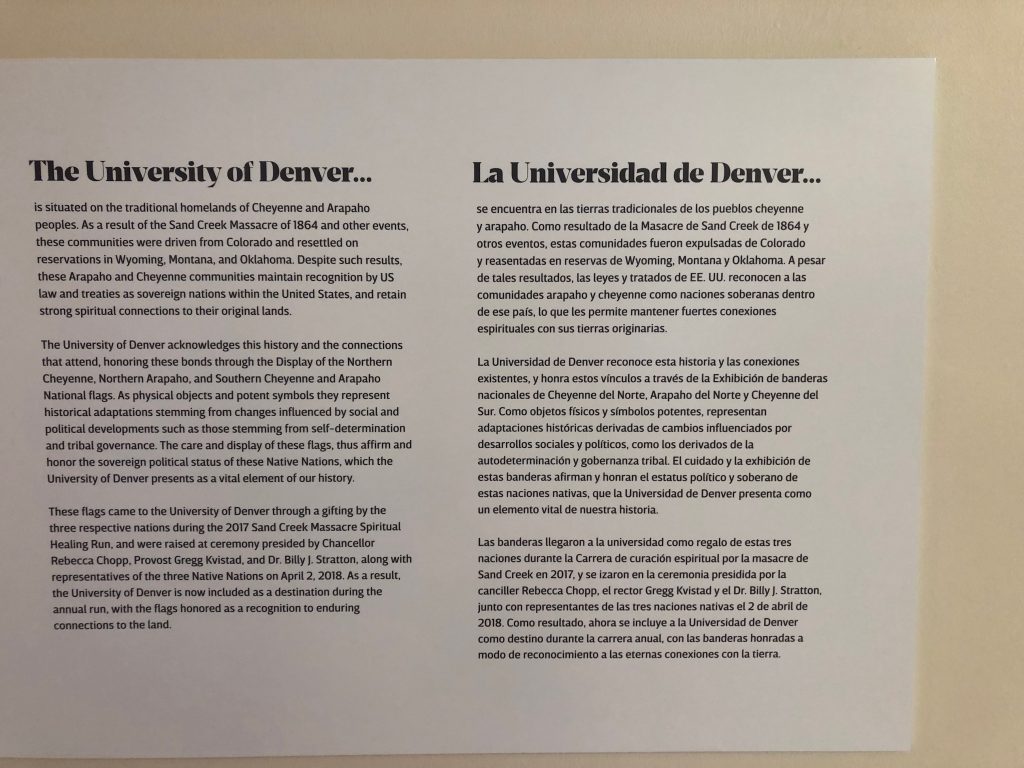
“Before the University purchased this land in the 1860’s it belonged to these Native American tribes, and they deserve to be commemorated as you see here,” mentioned Vice Chancellor Greenberg, motioning to the one of the many commemorative signs the University has put up in Mary Reed since transforming the main hall, which also happen to be bilingual (Spanish) for the first time in the school’s history.
The newly refurbished hallway has been a mainstay since Chancellor Rebecca Chopp announced The Denver Advantage Campus Framework Plan, the results of which students and faculty are now seeing in the form of three construction sites going up around the High Street side of the campus.

Photos by Maros Adamec. 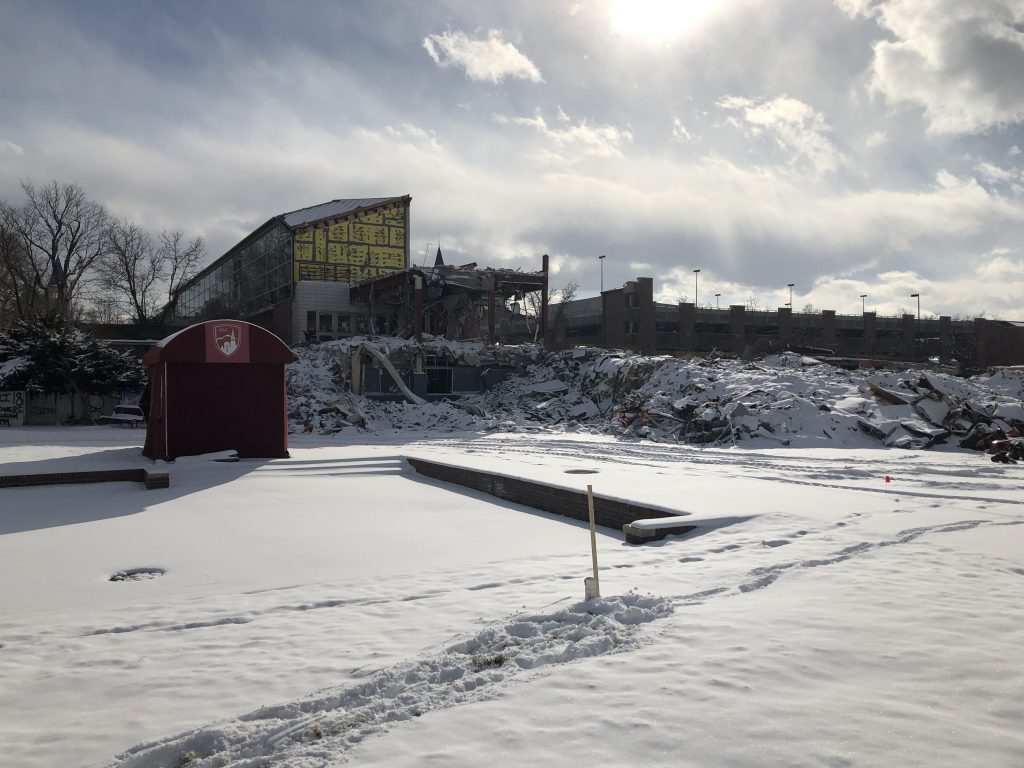
What can people expect on campus?
“There are three projects, that are the first three of what was called the Denver Advantage,” explained University Architect Mark Rodgers, who proceeded to specifically discuss the new 500 bed freshmen residence halls going up, and why it was placed in the Framework Plan with the Community Commons and Pioneer Career Achievement Center.
“The University identified that one of the things that was changing was where our students were coming from, and so they needed more dorms to accomodate students living on campus. That’s one of the things that comes from a strategic plan, is deciding what University you’d like to become.”
This strategic plan Rodgers referred to is DU Impact 2025, a plan separate from the Framework plan designed with a broader, more future oriented outlook that contains many more hypothetical projects apart from the three currently in progress. An integral cog in this decision making process outlined by Rodgers is Vice Chancellor Greenberg, who is a part of Chancellor Chopp’s team tasked with taking elements of the strategic plan and deciding which aspects have the largest immediate need and potential benefit for the campus community.
“They approached us with this plan and said, ‘This is what you could do. Not should, but here are places where there is space and potentially a need for construction,’” said Greenberg, referring to Ayers Saint Gross (ASG), a master planning and architectural firm out of Baltimore, MD who helped the University plan its next strategic steps moving forward.
“Part of what the Chancellor’s committee does is discuss on benefits from each project and whether or not to move forward on certain things… We wanted to improve the student experience by connecting more students to each other in the center of campus.”
What’s next with DU IMPACT?
Construction projects have been ongoing at the University since the Class of 2020 started here as freshmen students. Current DU Junior Brady Becco from Colorado Springs, CO remembers how the campus appeared when he visited as a senior, during his brother’s freshman year.

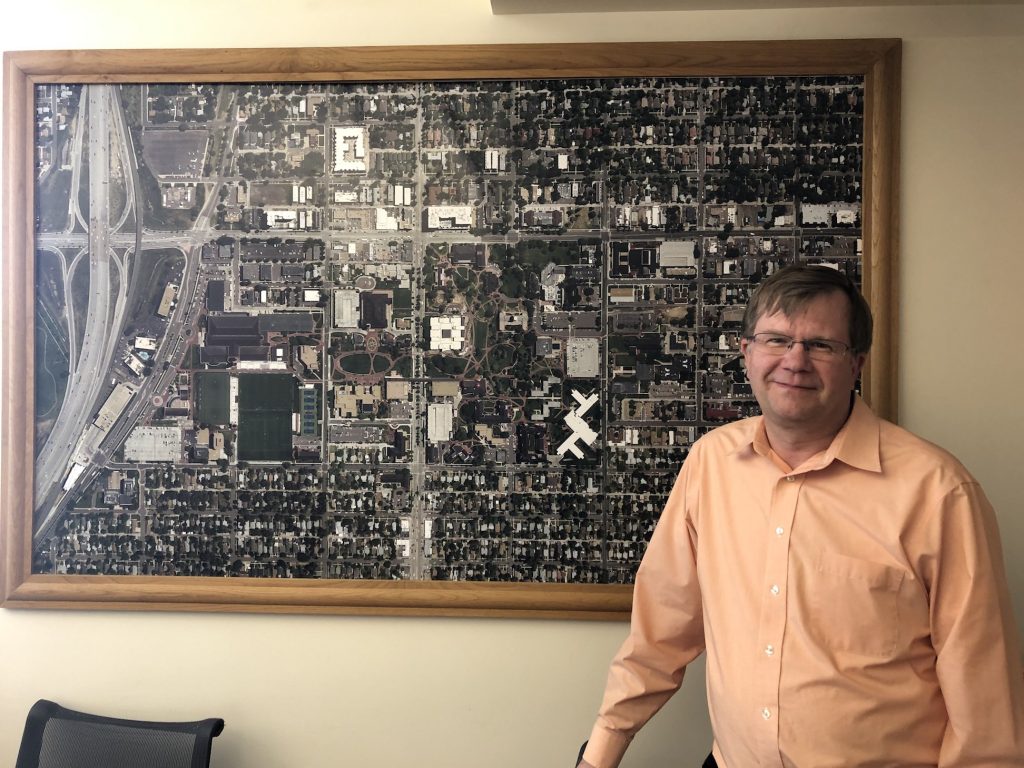
Dioramas of past DU construction projects hanging on the architect’s office walls. 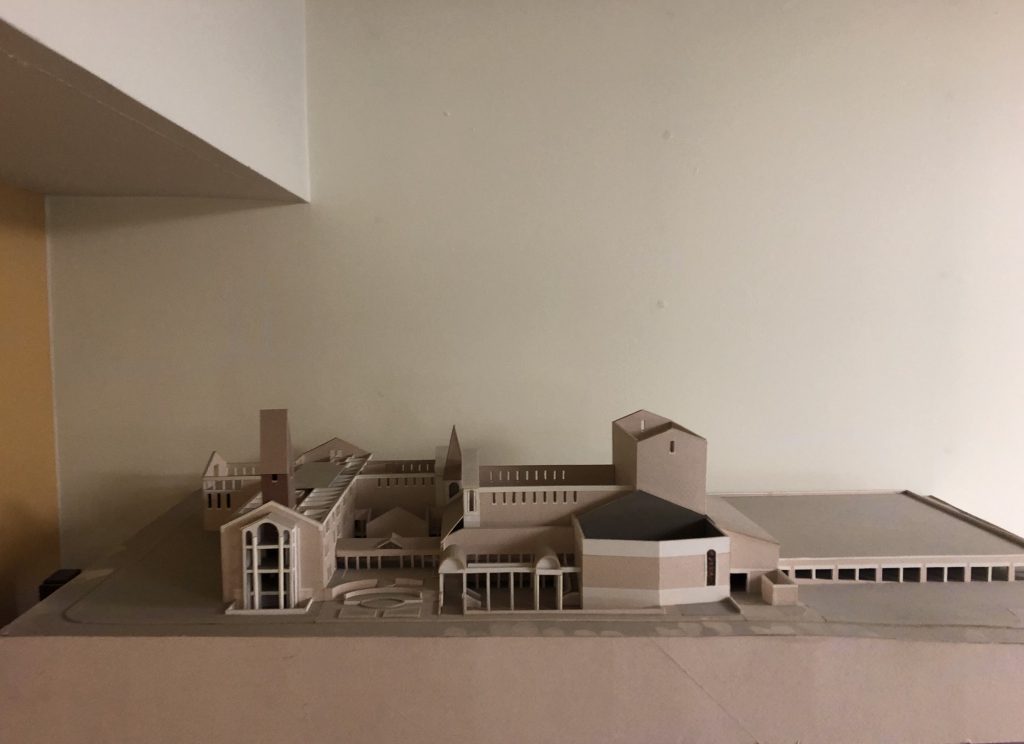
Photos by Maros Adamec.
“When I was touring they were promoting the new ECS building,” says Becco in regards to our relatively new Engineering and Computer Science building, “It wasn’t finished yet, so that part of campus was a little different, but it was close.”
While the three slated projects are set to open in the Fall of 2020 for a reported $140-160 million dollar price tag, there is still plenty of consideration to be had for what projects are floated up to the top next.
Even so, Mark Rodgers has tremendous faith in Rebecca Chopp, David Greenberg, and the rest of the team surrounding DU IMPACT, as ASG has given them plenty of really enticing ideas to think about, such as a small college center in a six-acre square off of I-25.
“We’re not trying to build Boulder, we’re not trying to build Larimer Square. But you think about a place where the bookstore should be? Where admissions should be?”